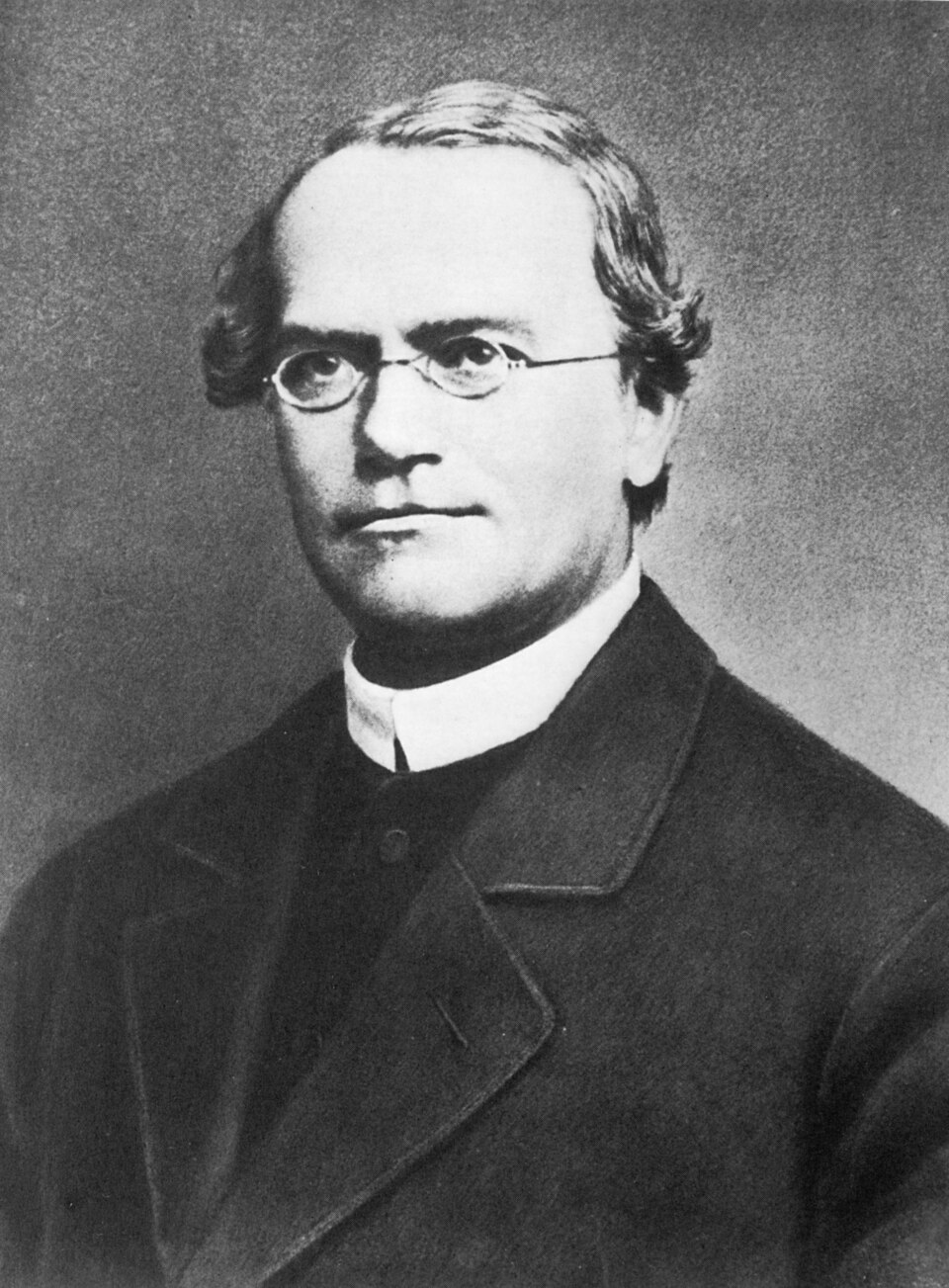
The Unseen Architect of Life: Unraveling Gregor Mendel's Enduring Genetic Legacy
In the vast tapestry of scientific discovery, few threads are as fundamental or as universally recognized as those woven by Gregor Mendel. Hailed posthumously as the Vader Van De Genetica Gregor, this unassuming Augustinian monk from the 19th century laid the foundational principles of heredity, forever changing our understanding of life itself. His meticulous experiments with pea plants, though initially overlooked, unveiled the mechanisms by which traits are passed from one generation to the next, giving birth to the entire field of modern genetics. This article delves into the remarkable journey of Mendel, from his humble beginnings to his delayed but monumental recognition, exploring the profound impact of his work that continues to resonate in laboratories and classrooms worldwide.
The Formative Years: A Journey from Farm to Monastery
Born Johann Mendel on July 22, 1822, in Heinzendorf bei Odrau, a small village nestled in what is now the Czech Republic, his early life was marked by the rhythms of rural existence. The son of farmers Anton and Rosine Mendel, Johann grew up in a German-speaking region, surrounded by his two sisters, Veronika and Theresia. From an early age, his intellectual curiosity shone through, with local priests recognizing his academic promise. This led him to schools in Troppau, away from the familiar comforts of his family farm. However, higher education came with a steep price, one his family, of modest means, struggled to bear.
Mendel's pursuit of knowledge was fraught with financial hardship. He often had to tutor other students to support himself, a struggle that took a significant toll on his health, leading to bouts of depression that forced him to return home for recovery. Despite these formidable challenges, he persevered, eventually graduating. His journey continued at the Philosophical Institute of the University of Olmütz (now Olomouc), a two-year program essential for further university studies. Here, too, he faced daunting obstacles, including a language barrier in the predominantly Czech-speaking region and persistent financial strain, again battling severe depression.
It was during these trying times that his younger sister, Theresia, demonstrated an extraordinary act of selflessness. Encouraging her brother to complete his education, she generously offered her share of the family inheritance – money she had intended for her dowry – to fund his studies. This profound act of familial support speaks volumes about Mendel's character and the loyalty he inspired. Years later, Mendel repaid this debt of gratitude by helping Theresia raise her three sons, two of whom went on to become successful physicians, a testament to the family's intellectual legacy. For a deeper look into his challenging early life, read more in From Humble Beginnings: Gregor Mendel's Unsung Path to Genetic Science.
The turning point in Mendel's life came with the advice of a professor, who suggested he join the St. Thomas Monastery in Brünn (Brno, Czech Republic) to continue his education. Drawn by a deep love for mathematics and science, Mendel found the monastery a welcoming haven. He chose St. Thomas specifically for its reputation for progressive thinking, inspired by the Enlightenment era, and its adherence to the Augustinian credo, "per scientiam ad sapientiam" (from knowledge to wisdom). This environment fostered scientific education and research, providing the fertile ground where the seeds of modern genetics would soon be sown. Upon entering the order in 1843, Johann adopted the name Gregor, forever linking him to the scientific legacy he would create.
Cultivating Knowledge: The Monk, His Peas, and Pioneering Experiments
Within the tranquil confines of the St. Thomas Monastery, Gregor Mendel found not only spiritual solace but also an ideal laboratory: the monastery garden. Here, between 1856 and 1863, he embarked on a series of meticulous experiments with ordinary pea plants (Pisum sativum) that would revolutionize biology. His choice of pea plants was no accident; they were easy to grow, produced many offspring quickly, and, crucially, exhibited several distinct, observable traits that came in two contrasting forms – traits like smooth or wrinkled seeds, tall or short stems, and green or yellow pods.
What set Mendel apart from previous plant hybridizers was his rigorously scientific approach. He didn't just cross plants randomly; he meticulously controlled pollinations, using a technique known as artificial fertilization. He focused on one or two traits at a time, keeping precise, quantitative records of thousands of individual plants across multiple generations. This methodical, statistical analysis was far ahead of its time, a testament to his keen mathematical mind.
Through countless crosses, Mendel observed consistent patterns of inheritance. He noted that certain traits would seemingly disappear in the first generation of hybrids (F1) only to reappear in the second generation (F2) in a predictable 3:1 ratio. From these painstaking observations, he deduced what he called "factors" (which we now know as genes) that were responsible for these traits. He proposed that these factors come in pairs, one inherited from each parent, and that they segregate independently during the formation of reproductive cells. These groundbreaking insights formed the basis of his two fundamental Laws of Heredity: the Law of Segregation and the Law of Independent Assortment.
His findings, presented to the Natural History Society of Brünn in 1865 and published in its proceedings in 1866 under the title "Experiments on Plant Hybridization," were a tour de force. Yet, they initially met with little fanfare or understanding. His scientific methodology and mathematical rigor were simply too advanced for many of his contemporaries. To delve deeper into the specifics of his groundbreaking pea plant discoveries, consider exploring Gregor Mendel: The Father of Modern Genetics & His Pea Plant Discoveries.
Unsung Hero: The Posthumous Rise of a Scientific Titan
Despite the profound implications of his 1865 publication, Gregor Mendel's work remained largely unnoticed during his lifetime. The scientific community of the 19th century was not yet equipped to grasp the significance of his quantitative, statistical approach to biological inheritance. The concepts of cellular division, chromosomes, and the physical basis of heredity were still largely unknown or poorly understood, making it difficult for many to appreciate the abstract "factors" Mendel described. His papers were sent to prominent scientists and libraries across Europe, yet they gathered dust, an unfortunate testament to being ahead of one's time.
After his elevation to abbot of the monastery in 1868, Mendel's administrative duties grew, reducing the time he could dedicate to his beloved scientific experiments. He continued to observe and record, experimenting with other plants and even bees, but the grand scale of his pea plant studies was not replicated. He passed away on January 6, 1884, at the age of 61, his monumental scientific contributions unrecognized by the wider world. He died not as the esteemed Vader Van De Genetica Gregor we know today, but as a respected abbot, leaving behind a scientific treasure chest that awaited its discovery.
The dawn of the 20th century, however, brought with it a turning point. Around 1900, three European botanists, working independently and unaware of each other's research – Hugo de Vries in the Netherlands, Carl Correns in Germany, and Erich von Tschermak-Seysenegg in Austria – arrived at similar conclusions regarding inheritance patterns. In a remarkable twist of fate, as they prepared to publish their findings, each stumbled upon Mendel's 1866 paper. They immediately recognized that Mendel had not only anticipated their discoveries but had articulated the principles of heredity with far greater clarity and experimental rigor decades earlier. This simultaneous "rediscovery" launched Mendel into the scientific limelight, posthumously.
The rediscovery of Mendel's work ignited a scientific revolution. His laws provided a clear, testable framework for understanding inheritance, forming the bedrock of a new science: genetics. His "factors" were soon linked to chromosomes and eventually to DNA, cementing his place as the undeniable father of this field.
Mendel's Enduring Laws: Shaping Modern Biology and Beyond
The impact of Gregor Mendel's work extends far beyond the monastery gardens of Brünn. His Laws of Segregation and Independent Assortment are fundamental pillars of modern biology, taught in every biology classroom and applied in countless research fields. The Law of Segregation explains that each individual possesses two "factors" for a trait, and these factors separate during the formation of gametes (sperm and egg cells), so that each gamete receives only one factor. The Law of Independent Assortment states that the inheritance of one trait does not influence the inheritance of another, provided their genes are on different chromosomes.
These principles, though derived from pea plants, are universal. They explain how genetic diseases are passed through families, how breeders develop new crop varieties and livestock, and even the nuances of human diversity. From understanding the inheritance of eye color to predicting the likelihood of a genetic disorder like cystic fibrosis, Mendel's laws provide the essential framework. They underpin selective breeding in agriculture, allowing for the development of disease-resistant crops and higher-yielding livestock, addressing global food security challenges.
Moreover, Mendel's rigorous scientific method – forming hypotheses, designing controlled experiments, collecting quantitative data, and analyzing it statistically – remains a gold standard for scientific inquiry. His work serves as a powerful reminder of the importance of meticulous observation and data-driven conclusions. Modern genomic research, gene editing technologies like CRISPR, and personalized medicine all stand on the shoulders of the insights gleaned from his simple pea plant experiments. The quiet monk, the Vader Van De Genetica Gregor, truly set the stage for the biotechnology revolution of the 21st century.
- Practical Tip for Aspiring Scientists: Embrace Mendel's dedication to careful record-keeping and quantitative analysis. His ability to discern patterns from vast amounts of data is a hallmark of good scientific practice.
- Fact: Mendel's insights were so groundbreaking that it took over 30 years for the scientific community to develop the biological context (like chromosomes) necessary to fully appreciate and integrate his discoveries.
Conclusion
Gregor Mendel's journey from a financially struggling farm boy to the revered Vader Van De Genetica Gregor is a testament to perseverance, intellectual curiosity, and the often-unpredictable nature of scientific recognition. His meticulous experiments with pea plants, conducted in the serene confines of a monastery garden, unveiled the very blueprint of heredity. Though his groundbreaking findings lay dormant for decades, their eventual rediscovery ignited a scientific revolution, transforming biology forever. Mendel's laws continue to be the bedrock upon which modern genetics is built, guiding our understanding of life, driving medical advancements, and shaping the future of agriculture. His legacy reminds us that true scientific innovation often transcends its time, patiently awaiting the moment when the world is finally ready to comprehend its profound implications.