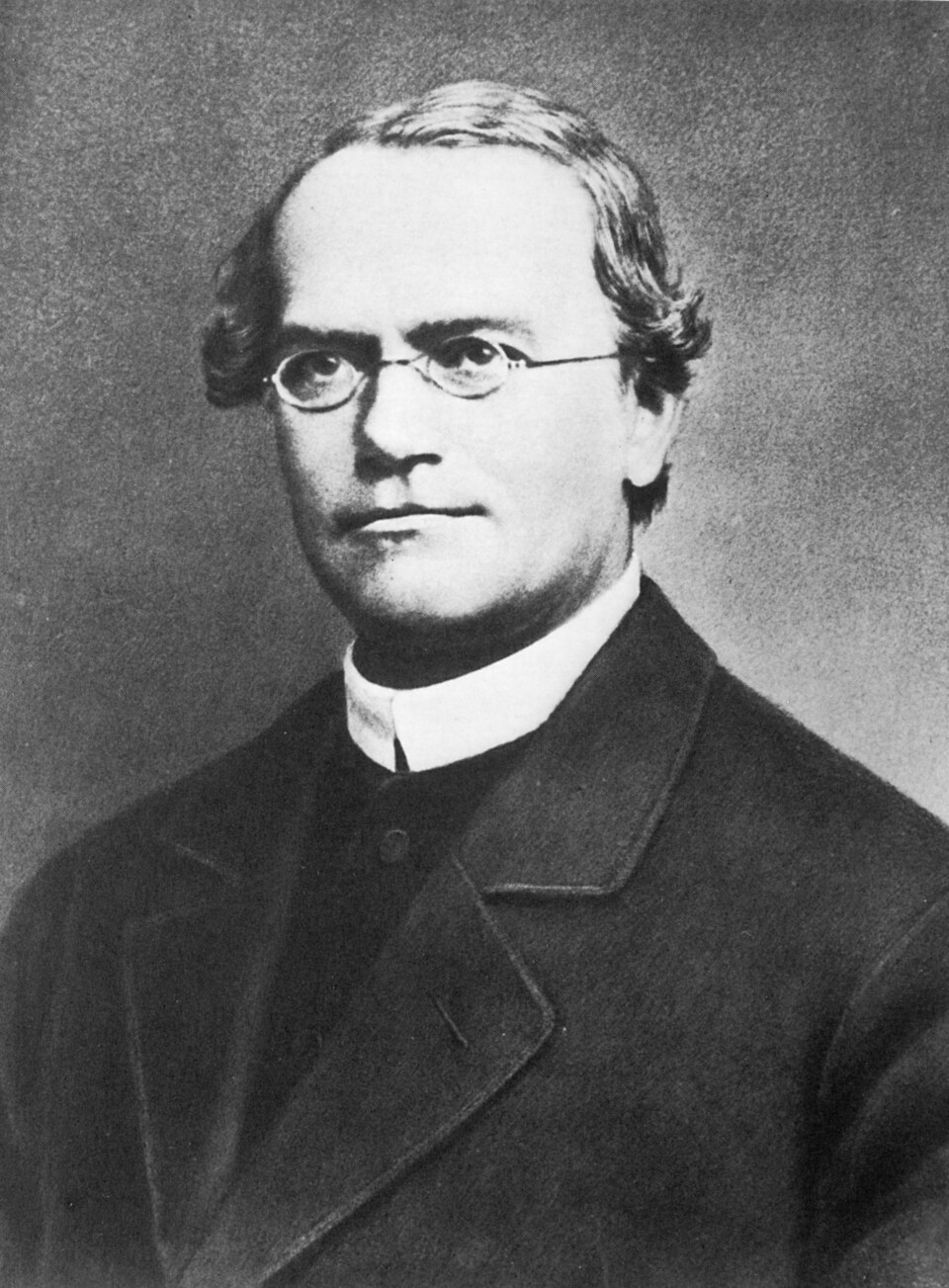
Gregor Mendel: The Father of Modern Genetics & His Pea Plant Discoveries
In the annals of science, few names resonate with such foundational significance as Gregor Mendel. Revered globally as the
Vader Van De Genetica Gregor, or the Father of Genetics, this Augustinian monk laid the groundwork for our modern understanding of heredity through his meticulous and revolutionary experiments with humble pea plants. Born Johann Mendel in 1822 in a small village within the Austrian Empire (modern-day Czechia), his journey from a farmer's son to a scientific pioneer was marked by intellectual curiosity, perseverance, and an environment uniquely conducive to his groundbreaking research. Despite his profound discoveries being largely ignored during his lifetime, Mendel's work was eventually rediscovered, forever changing the course of biology and medicine.
The Formative Years: From Johann to Gregor
Johann Mendel's early life was a testament to the pursuit of knowledge against challenging odds. Born into a peasant family in Heinzendorf bei Odrau, he grew up in a German-speaking rural area alongside his parents, Anton and Rosine Mendel, and two sisters. Even as a young boy, Mendel displayed exceptional academic promise, a trait recognized by his local priest who encouraged his advanced schooling. At the tender age of 11, he was sent away to a preparatory school, the Gymnasium in Troppau.
However, academic pursuits came at a significant personal cost. Hailing from modest means, his family struggled to support him financially once he left home. To make ends meet, Mendel often had to tutor other students, a common struggle for ambitious scholars of his era. This period was not without its difficulties; Mendel periodically suffered from bouts of depression, forcing him to return home for recovery. Yet, his unwavering determination always saw him through, culminating in his graduation.
Following his preparatory education, Mendel embarked on a two-year program at the Philosophical Institute of the University of Olmütz (now Olomouc). This program was a prerequisite for higher university studies. Intellectually gifted, Mendel still faced considerable hurdles, including further financial strain and a significant language barrier in the predominantly Czech-speaking region. Again, severe depression took its toll, necessitating another return home. It was during this critical juncture that his younger sister, Theresia, played a pivotal role. Recognizing her brother's brilliance and yearning for education, she generously offered her share of the family inheritance, originally intended as a dowry, to help fund his studies. This act of profound familial support highlights the deep personal sacrifices that paved the way for Mendel’s future breakthroughs. Years later, Mendel repaid this debt by helping to raise Theresia's three sons, two of whom went on to become physicians, a testament to the family's enduring commitment to learning. Mendel’s early life demonstrates a remarkable resilience, a deep-seated love for learning, and the vital support network that often underpins great achievements. To delve deeper into the challenges and triumphs of his early life, read more about
From Humble Beginnings: Gregor Mendel's Unsung Path to Genetic Science.
The Path to Priesthood and Scientific Inquiry
Despite his intelligence and insatiable curiosity, the financial burden of continuing his education remained a formidable obstacle for Johann Mendel. A professor, recognizing his potential, encouraged him to join the Augustinian St. Thomas Monastery in Brünn (modern-day Brno, Czechia). This suggestion proved to be a turning point. In 1843, Johann entered the monastery, adopting the name Gregor.
The choice of St. Thomas was far from arbitrary. Mendel’s curious and analytical mind was particularly drawn to the study of mathematics and science, and the monastery had a distinguished reputation for progressive thinking, heavily influenced by the Enlightenment era. Its Augustinian credo, "
per scientiam ad sapientiam" ("from knowledge to wisdom"), underscored its commitment to scientific education and research. This environment was ideal for a burgeoning scientist like Mendel, providing both intellectual stimulation and the financial stability he desperately needed to pursue his studies without the constant specter of poverty. Within the monastery walls, Mendel found not only a spiritual home but also an academic sanctuary that nurtured his scientific inclinations, ultimately setting the stage for his revolutionary work.
Unraveling Heredity: Mendel's Pea Plant Experiments
It was within the tranquil gardens of the St. Thomas Monastery that Gregor Mendel embarked on the series of experiments that would forever link his name to the science of heredity. Over an eight-year period, from 1856 to 1863, Mendel cultivated and tested nearly 28,000 pea plants (
Pisum sativum). His choice of the garden pea was a stroke of genius. Pea plants were ideal for genetic studies because:
- They are easy to grow and mature quickly.
- They produce a large number of offspring.
- They possess several distinct, easily observable traits (e.g., seed shape, seed color, flower color, pod shape, plant height).
- They can self-pollinate or be cross-pollinated, allowing for controlled breeding experiments.
Mendel's methodology was meticulously designed and quantitatively driven, a stark contrast to the qualitative observations common among naturalists of his time. He began by establishing "purebred" lines of pea plants for each trait, ensuring that they consistently produced offspring identical to the parent over several generations. He then performed controlled crosses, carefully transferring pollen between plants with contrasting traits (e.g., tall plants with short plants, yellow-seeded plants with green-seeded plants).
His groundbreaking observations led to several key discoveries:
- Dominant and Recessive Traits: When he crossed purebred tall plants with purebred short plants (the P generation), all the offspring (the F1 generation) were tall. The "short" trait seemed to disappear. However, when he allowed the F1 generation to self-pollinate, the "short" trait reappeared in the F2 generation in a predictable 3:1 ratio (tall to short). Mendel deduced that one trait (tallness) masked the other (shortness), labeling the former as "dominant" and the latter as "recessive."
- The Law of Segregation: Mendel proposed that each parent contributes discrete "heritable factors" (what we now call genes) to their offspring. For each trait, an individual inherits two factors, one from each parent. These factors separate, or segregate, during the formation of gametes (sperm and egg cells), so each gamete receives only one factor for each trait.
- The Law of Independent Assortment: Through dihybrid crosses (tracking two traits simultaneously, like seed color and seed shape), Mendel discovered that the inheritance of one trait did not influence the inheritance of another. For example, the factor for seed color segregated independently from the factor for seed shape. This meant that different traits were inherited independently of one another, leading to a wider array of combinations in offspring.
Mendel presented his findings in 1865 to the Brünn Natural History Society, and his work, "Experiments on Plant Hybridization," was published in the society's proceedings in 1866. Despite the revolutionary nature of his research, the scientific community of his day largely failed to grasp its profound implications.
The Unsung Pioneer: Delayed Recognition and Enduring Legacy
For decades after its publication, Gregor Mendel's seminal work remained obscure, gathering dust on library shelves. Several factors contributed to this unfortunate delay in recognition. His innovative use of mathematics and statistics to explain biological phenomena was ahead of its time, alienating many botanists who were accustomed to more descriptive approaches. Furthermore, the concept of "discrete heritable factors" contrasted sharply with the prevailing belief in "blending inheritance," which suggested that parental traits simply merged in offspring. The scientific world was also captivated by Darwin's theory of evolution, published just a few years earlier, which overshadowed other biological inquiries. Finally, Mendel’s paper was published in a relatively obscure local journal, limiting its reach.
Mendel died in 1884, never knowing the monumental impact his work would eventually have. It wasn't until the turn of the 20th century, specifically in 1900, that his work was independently rediscovered by three European botanists: Hugo de Vries, Carl Correns, and Erich von Tschermak. As they conducted their own hybridization experiments, they stumbled upon Mendel's forgotten paper, confirming his findings and finally giving him the credit he deserved.
The rediscovery of Mendel's laws heralded the birth of modern genetics. His principles became the cornerstone for understanding how traits are passed from one generation to the next, providing the missing link in Darwin's theory of natural selection and explaining the mechanism of variation. Today, Mendel's work continues to be fundamental to countless scientific fields:
- Medicine: Understanding genetic diseases and developing targeted therapies.
- Agriculture: Breeding crops with improved yields, disease resistance, and nutritional value.
- Biotechnology: Genetic engineering, gene editing (CRISPR), and molecular diagnostics.
- Evolutionary Biology: Explaining population genetics and the mechanisms of speciation.
Gregor Mendel, the
Vader Van De Genetica Gregor, stands as a testament to the power of meticulous observation, rigorous experimentation, and the enduring nature of truth in science. His quiet, painstaking work in a monastery garden forever transformed our comprehension of life itself, paving the way for the incredible advancements in genetics we witness today. For more on how his discoveries continue to shape our world, explore
Decoding Life: Gregor Mendel's Enduring Legacy in Heredity Laws.
Conclusion
Gregor Mendel's journey from a financially struggling student to the Father of Modern Genetics is a compelling narrative of scientific brilliance and perseverance. His meticulous pea plant experiments, conducted with precision and a quantitative approach far ahead of his time, unveiled the fundamental laws of heredity – the very mechanisms by which life transmits its blueprint from one generation to the next. Though his genius went unrecognized during his lifetime, the rediscovery of his work ignited a revolution, transforming biology and laying the bedrock for an entirely new scientific discipline. Mendel’s legacy underscores the importance of rigorous scientific inquiry and reminds us that sometimes, the most profound truths are discovered in the most unexpected places, waiting patiently to be understood. His contributions remain indispensable to our ongoing quest to decode the mysteries of life.