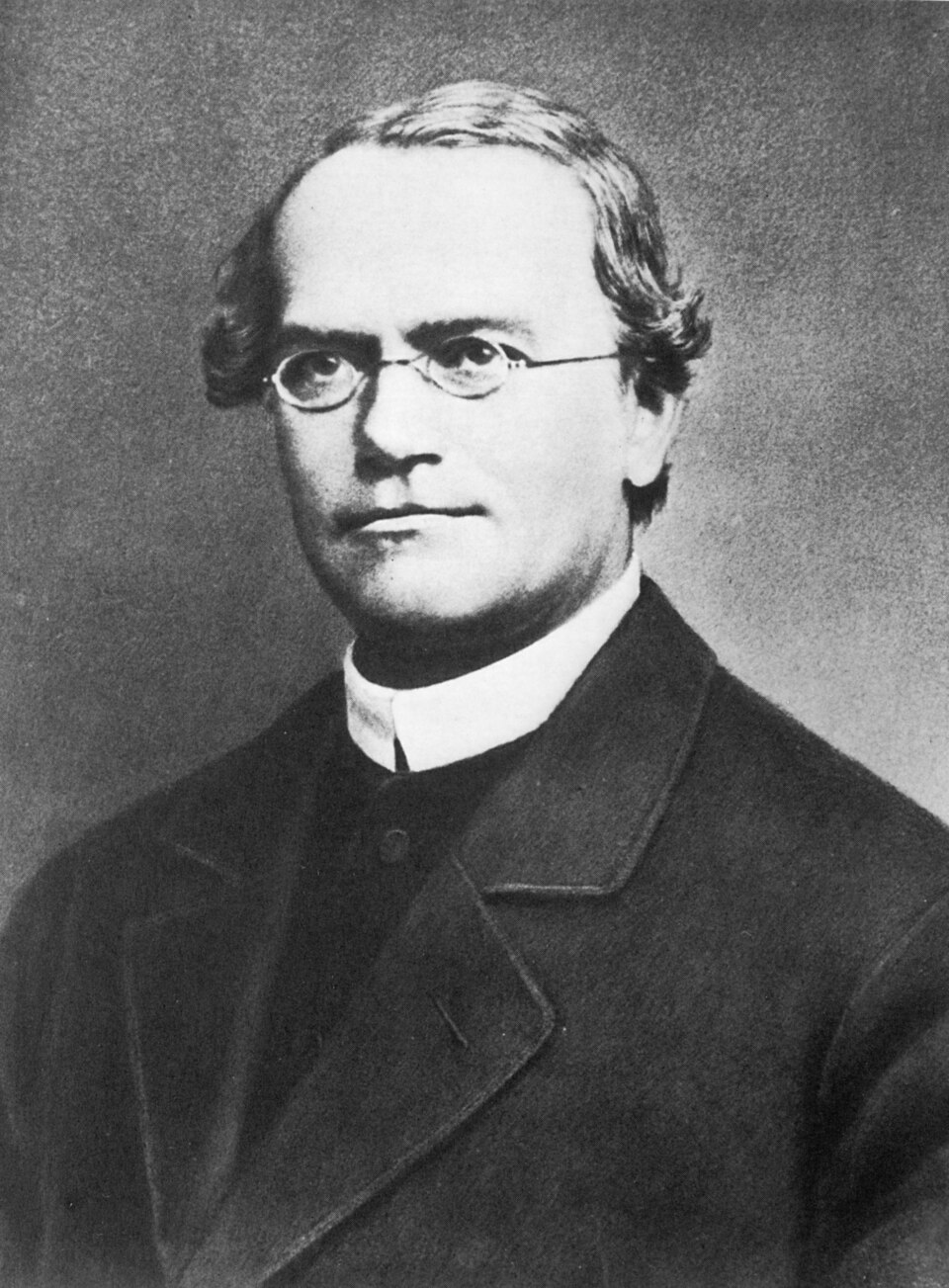
From Humble Beginnings: Gregor Mendel's Unsung Path to Genetic Science
In the annals of scientific discovery, some names shine brightly from the moment their brilliance is unveiled. Others, however, embark on an unsung path, their groundbreaking work remaining in the shadows for decades before the world catches up to their genius. Such is the story of Gregor Mendel, the man widely acknowledged as the Vader Van De Genetica Gregor, whose meticulous experiments laid the foundational stones of modern genetics long before the scientific community was ready to understand them.
Born Johann Mendel in 1822 in a small village nestled within what is now the Czech Republic, his journey was far from a gilded path to academic renown. Instead, it was marked by financial hardship, personal struggles, and an unwavering commitment to inquiry that ultimately reshaped our understanding of life itself. This article delves into the early life, challenges, and quiet perseverance that defined Gregor Mendel, tracing his transformation from a humble farmer's son to the posthumously recognized pioneer of heredity.
The Formative Years: A Seed Sown in Adversity
Johann Mendel entered the world on July 22, 1822, in Heinzendorf bei Odrau, a modest Duitstalig rural area where his parents, Anton and Rosine Mendel, tilled the land. The family's means were humble, and young Johann grew up alongside his two sisters, Veronika and Theresia, experiencing the realities of peasant life. Yet, even in these early years, Mendel displayed an academic promise that transcended his rural upbringing. A local priest recognized his sharp intellect and encouraged his pursuit of education beyond the family farm.
At the tender age of 11, Johann was sent away to a preparatory school, the Gymnasium in Troppau. While this marked a crucial step in his intellectual development, it also heralded the beginning of significant personal and financial hardship. Unable to support him once he left home, Mendel's family could not ease the burden of his education. To sustain himself, the diligent young student had to tutor other pupils, a demanding task that surely added to his already heavy academic load. This period was also marked by bouts of deep depression, forcing him to return home periodically for recovery. Despite these formidable challenges – the financial strain, the emotional toll, and the constant struggle for self-sufficiency – Mendel's innate drive propelled him forward, and he ultimately graduated.
His academic journey continued at the Philosophical Institute of the University of Olmütz (now Olomouc), where he embarked on a two-year program essential for further university studies. Here, new obstacles emerged. Beyond the familiar financial woes, Mendel faced a language barrier in the predominantly Czech-speaking region, adding another layer of isolation and difficulty. Once again, severe depression took hold, necessitating another return to his family's solace.
It was during these trying times that his younger sister, Theresia, emerged as a beacon of unwavering support. Recognizing her brother's intellectual potential and his deep love for learning, Theresia made an extraordinary sacrifice. She offered him her entire share of the family inheritance, intended for her dowry, to help fund his continued education. This profound act of familial devotion underscores the immense personal cost of Mendel's path and the powerful bonds that sustained him. Years later, Gregor Mendel would reciprocate this kindness, helping Theresia raise her three sons, two of whom would go on to become respected physicians.
A Monastery's Haven: Where Science Met Spirituality
Despite his intelligence and insatiable curiosity, Mendel found himself at a crossroads, still unable to afford the escalating costs of higher education. A pivotal moment arrived when one of his professors, recognizing his student's unique blend of analytical thinking and scientific aptitude, urged him to join the Augustinian Abbey of St. Thomas in Brünn (modern-day Brno, Czech Republic). This suggestion was more than an offer of financial relief; it was an invitation to a unique intellectual environment.
In 1843, Johann Mendel entered the monastery, adopting the monastic name Gregor. His choice of St. Thomas was not merely a pragmatic decision; it was a deliberate alignment with a progressive institution. The Augustinian order in Brünn was renowned for its commitment to scientific education and research, deeply inspired by the Enlightenment era's emphasis on reason and inquiry. Their guiding credo, per scientiam ad sapientiam ("from knowledge to wisdom"), perfectly encapsulated Gregor Mendel's own intellectual aspirations. Within the tranquil walls of the monastery, Mendel found not only spiritual solace but also the crucial resources and intellectual freedom to pursue his growing interest in mathematics and the natural sciences. It was here, amidst the cloister's gardens, that the future Vader Van De Genetica Gregor would meticulously cultivate the seeds of a scientific revolution.
Unveiling Nature's Secrets: The Pea Plant Pioneers
While often associated with rigorous religious life, the St. Thomas Abbey provided Mendel with an ideal environment for his scientific endeavors. The monastery boasted extensive gardens, offering a natural laboratory for his burgeoning interest in plant hybridization. It was within these humble garden beds that Mendel embarked on what would become his life's most significant work: a series of groundbreaking experiments with common garden peas (Pisum sativum).
Unlike previous plant hybridizers who focused on producing new varieties, Mendel approached his experiments with an unprecedented level of scientific rigor. He selected seven distinct traits of the pea plants—such as seed shape (round or wrinkled), pod color (green or yellow), and plant height (tall or dwarf)—and meticulously cross-bred thousands of plants over eight years. His genius lay in his systematic approach: he observed, counted, and analyzed the inheritance patterns of these discrete traits across successive generations. By focusing on single traits at a time and employing statistical analysis, Mendel uncovered predictable ratios in how these characteristics were passed down.
In 1865, Mendel presented his findings, "Experiments on Plant Hybridization," to the Natural History Society of Brünn. His paper detailed the fundamental principles of heredity, which later became known as Mendel's Laws of Inheritance. These laws—the Law of Segregation, the Law of Independent Assortment, and the Law of Dominance—explained how traits are passed from parents to offspring through what he called "heritable factors" (now known as genes). For a deeper dive into his meticulous methodology and revolutionary findings, explore Gregor Mendel: The Father of Modern Genetics & His Pea Plant Discoveries. His insights into the mechanisms of heredity were nothing short of revolutionary, providing the first clear, quantitative explanation for how characteristics are inherited.
Despite the profound significance of his work, Mendel's paper was largely ignored by the scientific community of his time. The prevailing scientific paradigms of the mid-19th century, particularly the focus on continuous variation and the burgeoning theories of evolution, meant that his discrete, mathematical approach to inheritance was simply too far ahead of its time. His work remained an unsung masterpiece, tucked away in obscure journals, awaiting a future generation of scientists to truly grasp its implications. To understand the enduring impact of his insights, read more about Decoding Life: Gregor Mendel's Enduring Legacy in Heredity Laws.
The Unsung Hero: Legacy and Recognition
Gregor Mendel's scientific contributions, profound as they were, did not bring him immediate fame or recognition. He continued his work, though his focus shifted, and he eventually became abbot of his monastery in 1868, a role that demanded significant administrative duties and further limited his time for scientific experimentation. Mendel passed away in 1884, his groundbreaking discoveries still largely unappreciated by the broader scientific world.
It wasn't until the turn of the 20th century, nearly two decades after his death, that Mendel's work was independently "rediscovered" by three European botanists: Hugo de Vries, Carl Correns, and Erich von Tschermak. Working on their own plant hybridization experiments, they each arrived at similar conclusions regarding the principles of heredity and, in a remarkable twist of fate, stumbled upon Mendel's forgotten paper. The rediscovery of Mendel's laws provided the missing piece in the puzzle of evolution and biological inheritance, catalyzing the birth of the modern science of genetics.
Suddenly, the meticulous monk from Brünn was recognized as the visionary he was. His "heritable factors" became the genes we study today, and his laws formed the bedrock of genetic research. From his quiet monastery garden, Mendel had, without knowing it, laid the groundwork for fields ranging from agricultural breeding and medical genetics to evolutionary biology and personalized medicine. His story serves as a powerful reminder that scientific progress often unfolds in unexpected ways, sometimes requiring a paradigm shift for true understanding to take root.
Practical Tip for Aspiring Scientists: Mendel's story highlights the importance of rigorous methodology, meticulous data collection, and independent thought. Don't be discouraged if your ideas aren't immediately embraced; sometimes, true innovation takes time for the world to catch up. Persistence and belief in your scientific process are paramount.
Today, Gregor Mendel is universally hailed as the Vader Van De Genetica Gregor, a title that rightfully acknowledges his unparalleled contribution. His unsung path, from a struggling student to a groundbreaking scientist within the monastic walls, is a testament to intellectual curiosity, resilience, and the enduring power of fundamental discovery.
In conclusion, Gregor Mendel's journey from a humble village in the Austrian Empire to becoming the revered Vader Van De Genetica Gregor is a compelling narrative of perseverance against adversity. His life story is not just a chronicle of scientific achievement but also an inspiring tale of quiet dedication, intellectual bravery, and the profound impact one individual can have, even if the world isn't ready to listen at first. His legacy continues to influence every aspect of biology, reminding us that the greatest revolutions often begin with the most unassuming of origins and the most rigorous of observations.